
Construction Dumpster Compaction in Houston: A Success Story
See How QuickCompact Makes Construction Dumpster Compaction More Efficient in Houston
Construction Dumpster Compaction in Houston: How One Jobsite Turned 119 Compactions into $38K in Savings
Construction dumpster compaction in Houston is transforming messy, overworked job sites into cleaner, more efficient, budget‐friendly projects. On one active Houston‐area build, our team at QuickCompact turned a simple trial into a measurable, five‐figure impact over the life of the job.
How Our Houston Trial Began
In October 2025, a general contractor in the Houston area was battling what every busy job site knows too well: overflowing dumpsters, constant roll‐off pulls, and hauling bills that seemed to grow with every phase of construction. They asked us to step in and put construction dumpster compaction in Houston to the test on a live project, not a controlled demo.
We launched a structured trial from October 20, 2025 through February 2, 2026. During that window, our Packmat mobile compactor rolled onto the site an average of two times per week, integrating with the GC’s schedule and the hauler’s routes. By the end of the trial, we had performed 119 total compactions across 29 individual visits—enough activity to show real patterns, not just isolated “wins.”
What We Achieved on This Houston Job
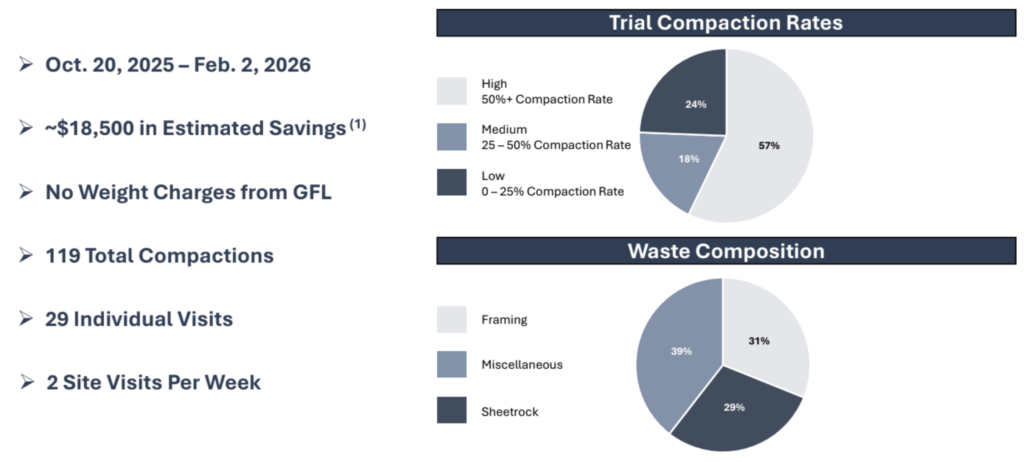
By compacting dumpsters already on site instead of constantly calling for new pulls, we delivered an estimated $18,500 in savings during the initial trial period. Those savings came from one simple lever: reducing the number of roll‐off pulls the project needed.
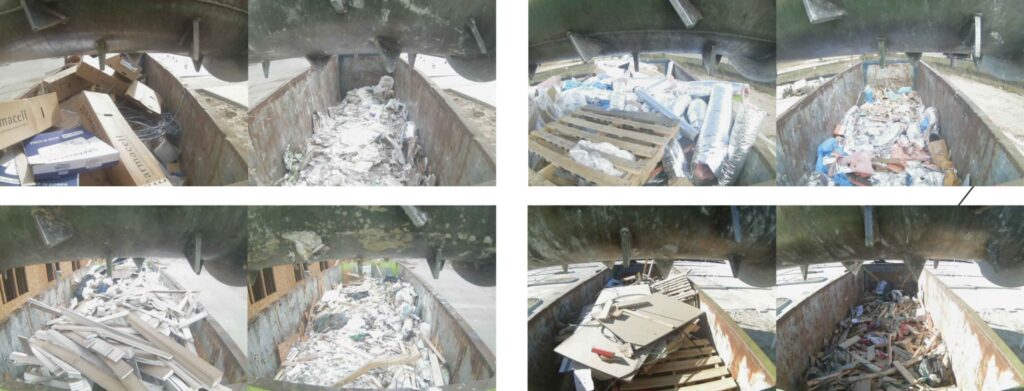
Examples of high compaction.
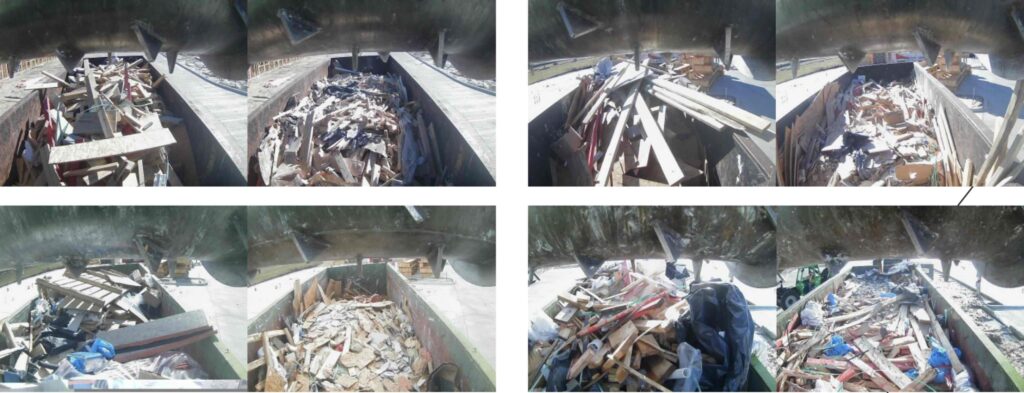
Medium compaction examples.
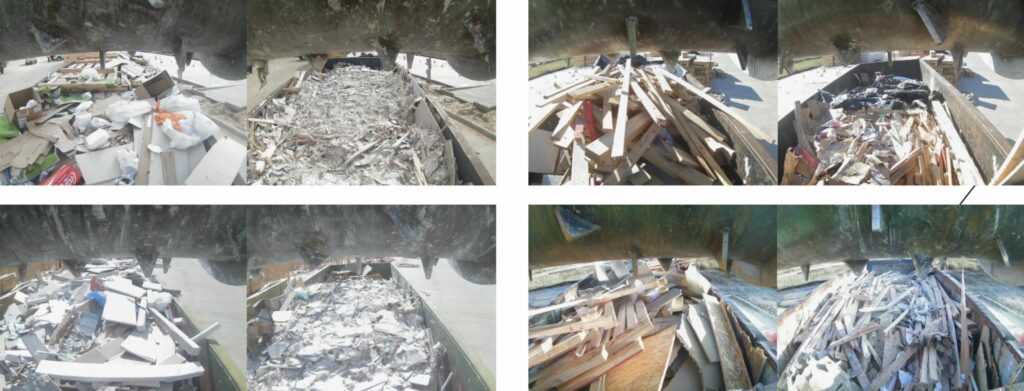
Low Compaction Examples
By measuring how full each dumpster was at the time of compaction and applying performance tiers (High, Medium, and Low compaction rates), we determined that the trial eliminated the need for roughly 37 dumpster pulls. On this project, with after‐tax hauling costs at about $500 per pull, those avoided hauls quickly translated into real dollars—and that was before the GC even considered the productivity boost of fewer interruptions and fewer overfull containers.
The Waste Mix We Were Dealing With
This case study is a realistic snapshot of construction dumpster compaction in Houston because the waste wasn’t “cherry‐picked.” The project produced the same blend you see on most large jobs:
-
Framing debris dominating early phases
-
Heavy loads of sheetrock as interiors ramped up
-
Miscellaneous and mixed waste throughout the project
Framing made up about 37% of the compacted material, making it the single largest category. Sheetrock and miscellaneous waste each represented just under one‐third of the volume, creating a balanced but challenging waste profile for us to manage.
How Different Materials Compacted
One of the biggest questions we wanted to answer on this Houston project was how different waste streams would respond to our compaction system.
Sheetrock
Sheetrock quickly became a star. Even though it accounted for just under a third of total compacted material, about 65% of our sheetrock compactions hit our High tier, delivering a 50%+ volume reduction. That meant the GC could delay pulls during the drywall phase, when dumpsters typically fill up fast.
Framing
Framing loads were tougher, as expected, but still delivered meaningful gains. About half of these compactions landed in the Medium tier, offering strong volume reduction even in a category that’s often considered “difficult” for compaction. Given framing’s large share of the overall waste stream, those medium‐tier results still reduced pulls and extended dumpster life in a big way.
Miscellaneous Waste
Miscellaneous waste was the quiet workhorse of the trial. These dumpsters showed the most consistent 50%+ compaction rates and made up roughly one‐third of total dumpster volume. For a GC, that reliability means that even mixed, unpredictable waste becomes a steady opportunity to squeeze more capacity out of every roll‐off on site.
Timing: The Sweet Spot for Compaction
Another major takeaway from this case study on construction dumpster compaction in Houston was timing. Instead of waiting for “emergency” calls when dumpsters were already overflowing, we studied performance at different fill levels to find the ideal window for compaction.
Across materials—especially sheetrock and miscellaneous waste—we saw strong high‐tier results even when dumpsters were around 75% full or more. Over time, our data pointed to a sweet spot at roughly two‐thirds full. At that point, we were reclaiming substantial capacity without flirting with overflow, blocked access, or last‐minute scheduling headaches.
Armed with that insight, we moved the project from reactive calls to a proactive schedule. Three carefully timed visits per week gave the GC predictable coverage and kept their waste program ahead of the curve.
From Trial to Full‐Project Strategy
The success of the initial trial gave the Houston GC enough confidence to treat compaction as a strategic cost‐control tool for the rest of the project—not just an experiment. We put forward a clear plan for the remaining months of construction:
-
Three compaction visits per week to match current waste output
-
Visit frequency tapering off as the project winds down
-
A sliding rate structure aligned with the number of dumpsters on site
We provided a sliding scale pricing structure that adjusted for the number of dumpsters on-site and the expected compaction time of each visit.
Projected Savings for the Remainder of the Job
Looking past the trial window and out through roughly October 2026, we modeled what consistent construction dumpster compaction in Houston could deliver for this project.
The GC expected about 150 dumpster pulls remaining on the job. With ongoing compaction, we projected that we could cut that in half, eliminating approximately 75 pulls.
At about $500 per pull, that reduction equates to roughly $38,000 in avoided hauling costs. To achieve that, we forecast 88 compaction visits for the balance of the project—48 visits at $250 and 40 visits at $150—for an estimated compaction cost of around $18,000. Net result: an additional $20,000 in savings over the rest of the build, on top of the $18,500 from the original trial period.
Safety, Documentation, and Peace of Mind
On any Houston construction site, safety and asset protection come first. Since April 2025, our team has compacted more than 600 dumpsters with no safety incidents and no container‐related damage. Our operators maintain a 20‐yard safety buffer around each dumpster, and our Packmat mobile compactor is engineered specifically to avoid direct contact with the roll‐off container itself.
Every compaction visit is documented with before‐and‐after photos for each dumpster we service. We send a weekly package of these images to the project management team so they can visually confirm fill levels, container condition, and the exact impact of each compaction cycle. Transparent documentation helps protect the GC, the hauler, and our own team.
Confirming What We’ve Always Known
This case study shows what construction dumpster compaction in Houston can really look like when it’s integrated into a live job: real savings, fewer pulls, cleaner sites, and predictable scheduling. On this project alone, 119 compactions turned into tens of thousands of dollars in avoided hauling costs and a stronger handle on waste management from start to finish.
If you manage construction projects in the Houston area and want to see how these numbers could translate to your own job sites, what type of projects are you running most—ground‐up builds, interiors, or heavy renovations?